
Fitted wardrobes replacement doors
Fitted wardrobes replacement doors
Fitted wardrobes replacement doors, with the existing cabinet and fittings checked before new fronts are measured.
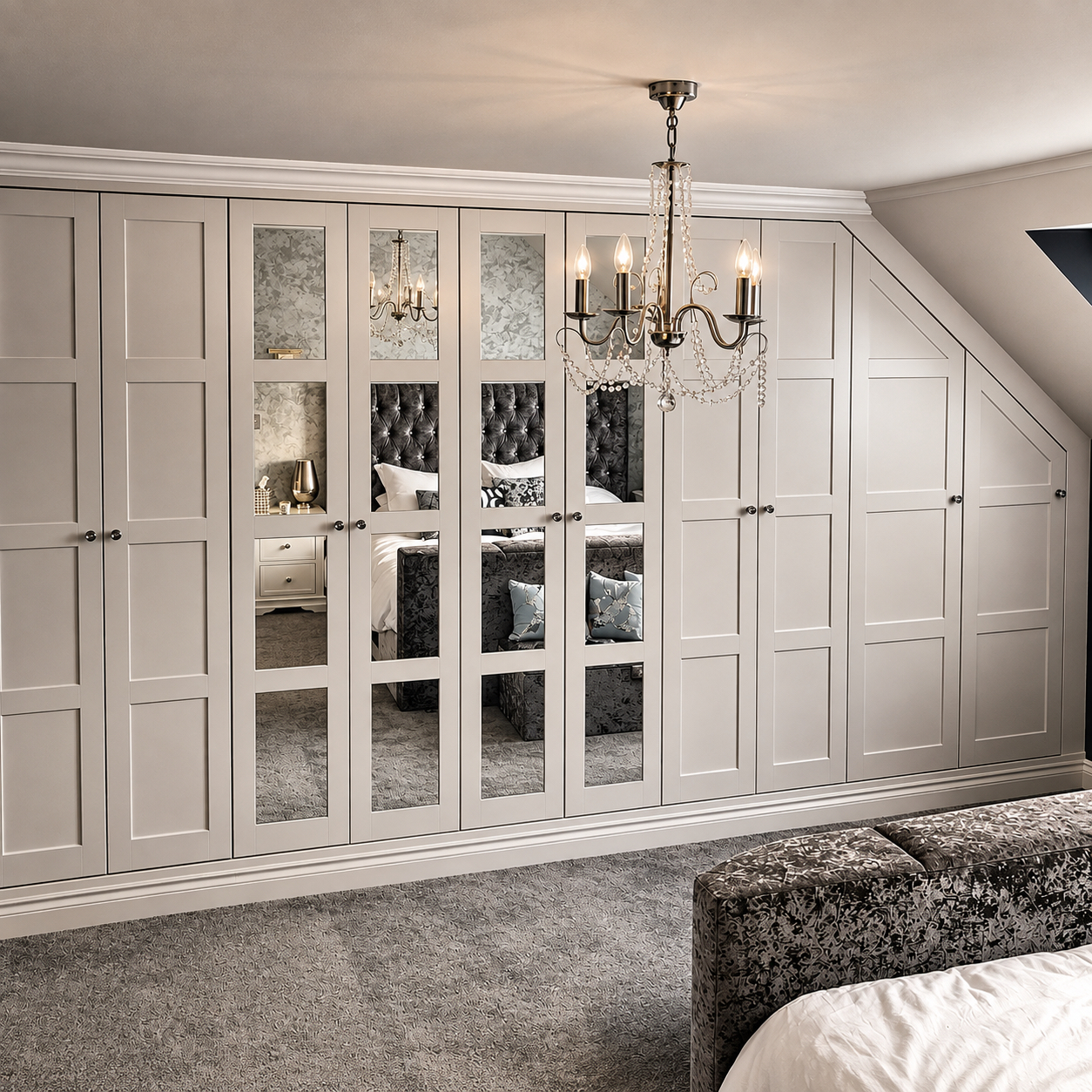
Replacement doors are a different job from building a complete fitted wardrobe. If the shelves, hanging space and cabinet remain useful, the fronts may be the only part you want to change. That decision depends on the condition of the structure, not just its appearance. Loose sides, damaged fixing points or signs of damp need attention before new doors are fitted.
What to consider
- Existing cabinet condition checked first
- Door sizes and openings measured individually
- Hinges or tracks checked against the new fronts
- Style and finish considered alongside retained joinery
Keeping the cabinet and changing the fronts
Start with what is wrong or what you want to change. A door that catches may need adjustment rather than replacement. A different door style will not correct a cabinet that has moved out of square. Photographs of the whole wardrobe, its hinges and any damaged edges help separate a fitting problem from a request for new fronts.
Measuring built-in wardrobes replacement doors
Each door opening should be measured rather than assuming every leaf is identical. Existing fitted furniture can have small differences between bays, especially beside a sloping ceiling or uneven wall. The new fronts need suitable gaps around their edges and clearance above the floor. Measure the cabinet and its openings as well as the old doors.
Check how each door opens against the bed, nearby drawers and room doorway. The thickness and position of the front affect that movement. Replacing one door with a wider leaf can change the access and load on the hinges. Agree the complete door arrangement before choosing handles or ordering a set based on the overall wardrobe width.
Hinges, handles and the weight of the doors
Hinge choice depends on the door construction, weight and how it sits against the cabinet. Existing hinges may suit the replacements, but their condition and fixing positions still need checking. Enlarged screw holes or thin cabinet edges may require a different solution. New fronts should not be fitted by relying on a damaged fixing simply because the old door used it.
Plain, shaker or panelled fronts can be considered alongside existing bedroom joinery. Agree the finish on both sides and the exposed edges, not just the visible face. Handle positions affect access and should suit the people using the wardrobe. A heavier front may need different hardware even when its outside dimensions match the door being removed.
Sliding doors and repairable hardware
Sliding doors use tracks, rollers and guides that must work as a compatible system. A new panel cannot automatically use every existing track. Check the maker, door weight limits and available replacement parts before deciding what can stay. Include photographs of any labels and the top and bottom fittings when asking about a sliding door problem.
If a door sticks, avoid forcing it or lifting a heavy mirrored panel without support. Loose debris, adjustment or worn hardware can cause poor movement, but the cause needs identifying. Replacing the fronts does not necessarily mean replacing the whole wardrobe interior. The sliding wardrobe page explains the wider layout where a complete new run is being considered.
Cost, fitting and agreeing the scope
The number and size of doors, material, finish and hardware affect replacement cost. Work to the cabinet can change the scope, as can switching between hinged and sliding openings. A price for fronts alone is different from a price that includes measurement, hinges, handles, fitting and disposal of the old doors. Compare the same items in each quote.
Timing depends on the agreed fronts, preparation and any parts needed for the existing system. Decide how the wardrobe contents will be protected or moved before fitting. Check what decoration is included and whether retained cabinet edges need finishing to sit alongside the new fronts. Keep the agreed door layout with the quote so there is a clear record of what will change.
See also: wardrobe doors not closing properly.
Planning the next step
Describe what needs fitting or repairing, with a photograph showing the existing joinery. Include any planned flooring or decoration, and say which parts you want to keep.
See also: Related joinery and fitting.
Ask about wardrobe door replacement
Fitted wardrobes replacement doors, with the existing cabinet and fittings checked before new fronts are measured.
Wardrobe Door Replacement questions
- Can fitted wardrobe doors be replaced without changing the inside?
- Yes, where the cabinet is sound and suitable for the proposed fronts. Check its condition, openings and fixing points before deciding to retain the interior.
- Does a sticking wardrobe door need replacing?
- Not necessarily. Hinges, tracks, rollers or an out-of-square cabinet may be the cause. Identify the problem first; a new front alone may not solve it.
- Can new sliding doors use the old tracks?
- Only if the system is compatible with the proposed doors and the retained parts are sound. Check the maker, hardware and door weight requirements before ordering.
- What affects the cost and fitting time?
- Door sizes, quantity, construction, finish and hardware matter, along with any work to the cabinet. Agree what is supplied, retained and fitted before comparing quotes or arranging access.
Read up before you commit
- Wardrobe Doors Not Closing Properly: What Is Going Wrong
A practical guide to diagnosing wardrobe doors that stick, drop or will not close properly, whether hinged or sliding.
- Sliding vs Hinged Wardrobe Doors: Which Suits Your Bedroom Better
We compare sliding and hinged wardrobe doors on clearance, everyday access, mirrored finishes, running gear and price to help you pick the right one.
Other panelling and joinery
The short version
Fitted wardrobes replacement doors, with the existing cabinet and fittings checked before new fronts are measured.
Ask about wardrobe door replacement
Tell us what you have in mind, with a photo and rough measurements of the space.